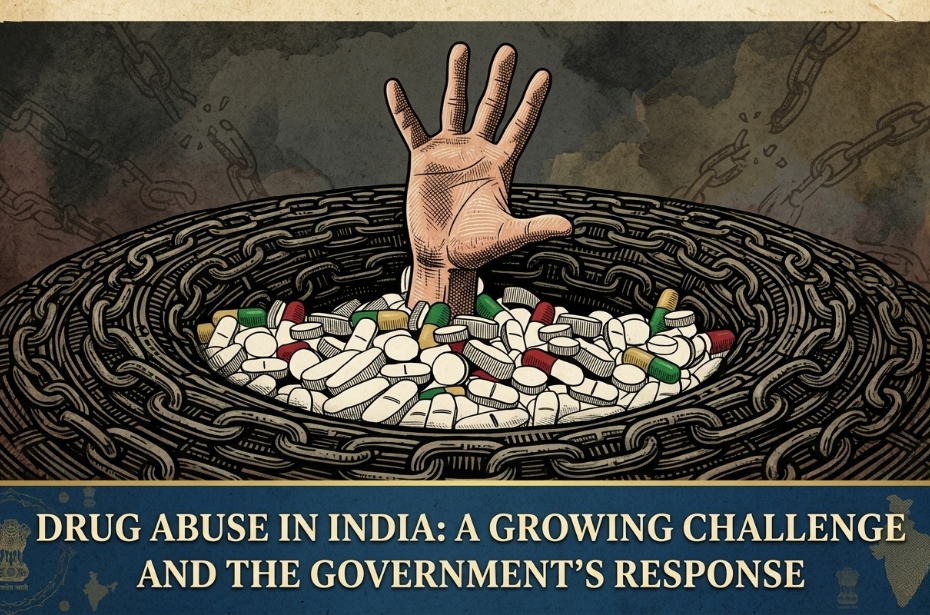
Drug abuse is a serious public health problem worldwide, including in South Asia. In India, the challenge is even greater due to its large population, which makes it harder to control the spread and use of illegal drugs. It is estimated that about 31 million use cannabis, 22.6 million people in India use opioids, and around 2 million use stimulant drugs. Out of these, cannabis and opioids are the most commonly used illegal drugs. This essay will talk about what India is doing to reduce the use of these illegal substances. This topic is especially important for students studying in the best law college, as understanding drug laws and policies plays a crucial role in legal education and public awareness.
Challenges India Faces :
One of the biggest concerns in India is the sharp rise in opioid addiction. Between 2004 and 2018, the number of people addicted to opioids increased from 0.7% (aged 12–60) to 3.97% (aged 10–75). The number of people injecting drugs also rose dramatically, from 200,000 to 850,000 in just ten years. Unfortunately, only about 25% of those who need help are receiving treatment. Another concern is the increasing use of stimulant drugs, especially methamphetamine, which is found in “crystal meth” and yaba pills (a mix of methamphetamine and caffeine). These drugs are highly addictive and pose new challenges for law enforcement and public health systems.
Government Measures to Tackle Drug Abuse are as follows:
- Reducing Drug Supply :India has taken several steps to limit the supply of illegal drugs. “The Narcotic Drugs and Psychotropic Substances Act (NDPS), 1985” criminalizes the production, trafficking, possession, and use of illegal drugs. It gives law enforcement agencies power to monitor and stop drug-related activities and lays down punishments. “The Narcotics Control Bureau” (NCB) is the main agency responsible for enforcing these laws. Its tasks include:
- Seizing illegal drugs
- Destroying drug-producing farms
- Running the “National Narcotics Coordination” (NCORD) Portal, which tracks the movement of drugs
- Managing the NIDAAN Portal, which keeps data on people arrested under the NDPS Act
According to the World Drug Report, the NCB has made several large seizures of drugs like heroin, opium, and cannabis. The NDPS Act supports the goals of India’s 2012 “National Policy on Narcotic Drugs and Psychotropic Substances”, which aims to shut down secret labs making synthetic drugs and psychotropic substances. To understand the scale of stimulant and psychoactive drug use, the Ministry of Finance and the “United Nations Office on Drugs and Crime” (UNODC) have conducted national surveys. The UNODC has also supported training programs to help law enforcement improve their efforts in drug detection and seizure.
- Reducing Drug Demand and Harm :Preventing drug use through education and community-based efforts is key to reducing demand. One major initiative is NAVCHETNA, developed by the “Ministry of Social Justice and Empowerment”, which focuses on teaching life skills and promoting healthy behaviors among youth and families.India’s first major effort in demand reduction was the Scheme for Prevention of Alcoholism and Substance Abuse launched in 1985–86. This led to the creation of “Integrated Rehabilitation Centres for Addicts” (IRCAs), which offered support for prevention and recovery. In 1988, “the Drug De-addiction Programme” was introduced to build a national network of clinics providing medical treatment and professional training.
In 2014, “the Ministry of Health and Family Welfare set up Drug Treatment Clinics” (DTCs) in hospitals to provide outpatient services. So far, 27 hospitals have launched such clinics. In 2019, the government introduced the “National Action Plan for Drug Demand Reduction” (NAPDDR). It offers financial help for:
- Awareness and education
- Skill development and job training
- Running rehab centers like IRCAs
- Supporting former addicts in rebuilding their lives
NAPDDR also promotes both inpatient and outpatient care, as well as “Opioid Substitution Therapy” (OST). As part of this effort, “46 Addiction Treatment Facilities” (ATFs) have been established across India, and more are on the way.
Another key initiative under this plan is the “Nasha Mukt Bharat Abhiyaan” (“Drug-Free India Campaign”), launched in 2020. It aims to involve communities and local governments in preventing drug abuse and assessing local needs at the district level.
Despite these efforts, there are still major gaps. Many schools don’t run prevention programs regularly, and there are no targeted interventions for high-risk groups like street children. While the government limits the import and production of drug-making chemicals and encourages farmers to switch from growing illegal crops, it still doesn’t allow the controlled farming of traditional low-risk crops like cannabis and opium poppy for medicinal use. India also plans to use information technology to support supply control and training, but steps must be taken to protect sensitive data. Furthermore, the country still lacks a national monitoring system to track drug use patterns, treatment rates, and obstacles people face in getting help.
The Way Forward :
To fight drug abuse effectively, India must invest more in healthcare and treatment services, such as outpatient clinics, mental health support, and rehabilitation centers. It is also important to train professionals like counselors, educators, and social workers. Addressing drug abuse also means tackling the deeper political, social, and economic factors behind it. Lasting change will require cooperation between the government, healthcare providers, civil society, and local communities.
At present, many people who need treatment aren’t getting it. The Indian government must focus more on prevention and access to care to close this treatment gap.
Author
Dr. Sonam Ratnu
HOD, Department of Law
Biyani Law College,Jaipur